
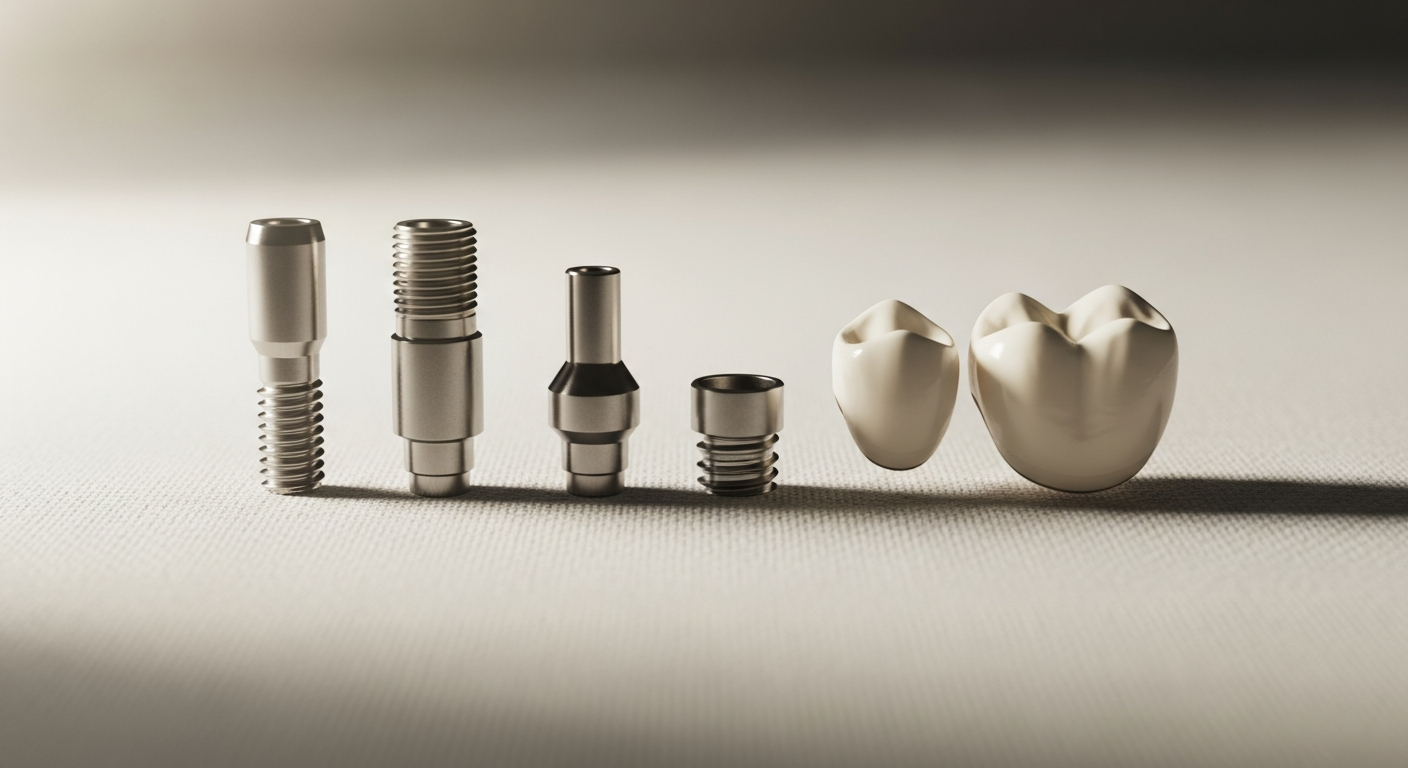
All-on-4 Dental Implants in the Pittsburgh Area: What You Should Know
If you've been living with significant tooth loss — or wearing dentures that never quite felt like your own teeth — you've probably wondered whether there's a better option. All-on-4 dental implants come up a lot in those conversations, and for good reason. At Steel Valley Smiles in Munhall, we talk with patients about this option more and more, and I want to give you a straightforward look at what it actually involves.
No pressure, no sales pitch. Just the information you deserve to have.
What Are All-on-4 Dental Implants?
All-on-4 is a way to replace an entire arch of teeth — upper, lower, or both — using four titanium implants placed into the jawbone. Those implants support a full set of fixed teeth. Think of it like building a deck: instead of putting a post under every plank, you use strategically placed supports to hold the whole structure securely.
The result is a set of teeth that stays in place. You're not removing them at night. You're not worrying about adhesive. You're eating and talking the way you would with natural teeth.
This is different from traditional dentures, which rest on the gum surface and can shift over time. It's also different from individual dental implants, where each tooth gets its own implant post. All-on-4 is designed specifically for patients who have lost most or all of their teeth in one arch and want a stable, long-lasting solution.
Who Might Be a Good Candidate?
All-on-4 tends to work well for patients who are missing most or all of their teeth on one or both arches, or for patients whose remaining teeth are too damaged to save. Many patients who come in wearing full dentures — especially if they've been dealing with bone loss over time — find that All-on-4 offers a more secure fit than conventional options.
One reason All-on-4 was designed the way it is has to do with bone density. Traditional implant placement sometimes requires significant jawbone volume. With All-on-4, two of the four implants are placed at an angle, which often allows patients to move forward without additional bone grafting. Not always — individual situations vary — but it opens the door for people who might have been told they weren't candidates before.
The best way to know if it's right for you is a conversation and a proper evaluation. There's no commitment in asking questions.
What the Process Typically Looks Like
I won't sugarcoat it: this is a meaningful dental procedure, and it does take some time from start to finish. Here's a general sense of how it usually goes.
Consultation and planning. We start by getting a full picture of your oral health — a complete set of x-rays, an exam, and a real conversation about your goals and concerns. This is where I get to know you a little, not just your chart.
The procedure itself. The implants are placed surgically, and a temporary set of teeth is typically attached the same day. That's one of the features of All-on-4 that many patients appreciate — you're not walking out without teeth.
Healing and osseointegration. Over the following months, the implants fuse with the jawbone. This process is called osseointegration, and it's what gives the implants their stability. It takes time, and that's okay. Good things usually do.
Final restoration. Once healing is complete, your permanent set of teeth is placed. These are designed to look and function naturally — harmonious with your face, your bite, and the way you speak and eat.
Treatment timelines vary based on individual needs and clinical factors.
A Word on Comfort
I know some patients read "surgical procedure" and immediately feel anxious. That's completely normal. Honestly, I'm not a big fan of getting dental work done myself — so I genuinely understand the feeling. What I can tell you is that we take every step to make the experience as calm and comfortable as we can. We'll walk you through exactly what to expect before anything happens, and you'll never be left wondering what comes next.
If you've had difficult dental experiences in the past, please tell us. It helps us take better care of you, and there's nothing to be embarrassed about.
How Does This Compare to Traditional Dentures?
Many patients who've worn dentures for years describe a real shift in confidence after moving to implant-supported teeth. Conventional dentures can move during meals or conversations, which many people find frustrating. All-on-4 implants are fixed in place, so that movement simply isn't a factor.
There's also the bone health piece. When teeth are missing, the jawbone can gradually shrink over time because it's no longer being stimulated. Implants help maintain that stimulation, which may help preserve bone structure over the long run.
Frequently Asked Questions
Is All-on-4 right for someone who has had dentures for many years? It can be, yes. Many long-term denture wearers explore All-on-4 because they want something more stable. Bone loss is common after years without natural tooth roots, but All-on-4's angled implant design means that, in many cases, this can still be an option. A proper evaluation will give us a clearer picture for your specific situation.
Does the procedure hurt? The surgery is done with anesthesia, so you won't feel pain during the procedure. Some soreness and swelling in the days after is typical and expected. We'll make sure you know exactly how to manage recovery before you leave, and we're always a phone call away if something doesn't feel right.
How long do All-on-4 implants last? With good care — regular cleanings, checkups, and proper at-home hygiene — All-on-4 implants can be a very long-lasting solution. Individual results vary, and how well they hold up over time depends on factors like bone health and how well the implants are maintained. We'll give you everything you need to take care of them well.
What does it cost, and does insurance help? A lot of factors go into the final number, so we work it out from your actual case rather than a starting price. After the exam and imaging we write out the plan with the numbers on it, and we check your benefits with your carrier — some plans offer partial coverage for implant-related treatment, others don't — so the estimate shows what's expected to be covered against what you'd pay. You see that before anything gets scheduled, and CareCredit and Cherry can break a balance into monthly payments.
Living with tooth loss affects more than just eating. It can affect how you feel talking with people, how you hold back a laugh, how you show up in the world. If you've been sitting with questions about All-on-4, I hope this gives you a clearer starting point.
We're here whenever you're ready to talk — no rush, no pressure.
More from Our Blog

Does Teeth Whitening Damage Your Enamel?
Used as directed, whitening doesn't wear enamel away. Peroxide softens the surface for a short time, saliva repairs most of it within about two weeks, and the sting some people feel comes from the nerve.
Read more
Are Silver Fillings Safe, and Should You Replace Yours?
For most adults, a silver filling in good condition is safe to leave alone, and drilling it out costs healthy tooth. Dr. D'Alesio explains what the FDA said in 2020, who it named, and the signs a filling really needs replacing.
Read more
How Much Does a Root Canal Cost? What Changes the Price
Root canal cost follows the tooth: a back tooth has more canals to clean than a front one, and the crown that protects it afterward is a separate line. Dr. D'Alesio explains what a quote covers and what to ask for.
Read more