
Dentures vs Dental Implants in the Pittsburgh Area: Comparing Your Options
If you've lost a tooth — or several — and you're trying to figure out what comes next, you're in good company. A lot of folks in Munhall and around the Pittsburgh area sit in my chair asking the same thing: should I get dentures or dental implants? It's a fair question, and honestly, there's no single right answer for everyone. So let's walk through both, in plain language, the way I'd explain it to a neighbor.
First, a Little Reassurance
Losing teeth can feel like a big deal. Some people feel self-conscious about it, others feel frustrated, and plenty of folks just want to chew comfortably again. All of that is normal. I'm not a big fan of getting dental treatment myself, so I get it — nobody wakes up excited to talk about missing teeth.
What I want you to know is that both dentures and implants are good, time-tested ways to restore your smile and your bite. The goal isn't to push you toward the fancier option. The goal is to find what fits your mouth, your health, and your life.
What Are Dentures?
Dentures are removable replacements for missing teeth. You can have a full set, which replaces all the teeth on the top or bottom, or a partial set that fills in a few gaps while your natural teeth stay put.
The big appeal of dentures is that they're a non-surgical option. For someone who isn't a candidate for surgery, or who'd simply rather avoid it, that matters. Dentures also tend to cost less at the start, and many patients adjust to them well over time.
They do take some getting used to. You'll learn how they feel when you eat and talk, and they'll need to be cleaned and cared for daily. Over the years, the shape of your jaw can change, so dentures sometimes need adjusting or relining to keep that comfortable fit.
What Are Dental Implants?
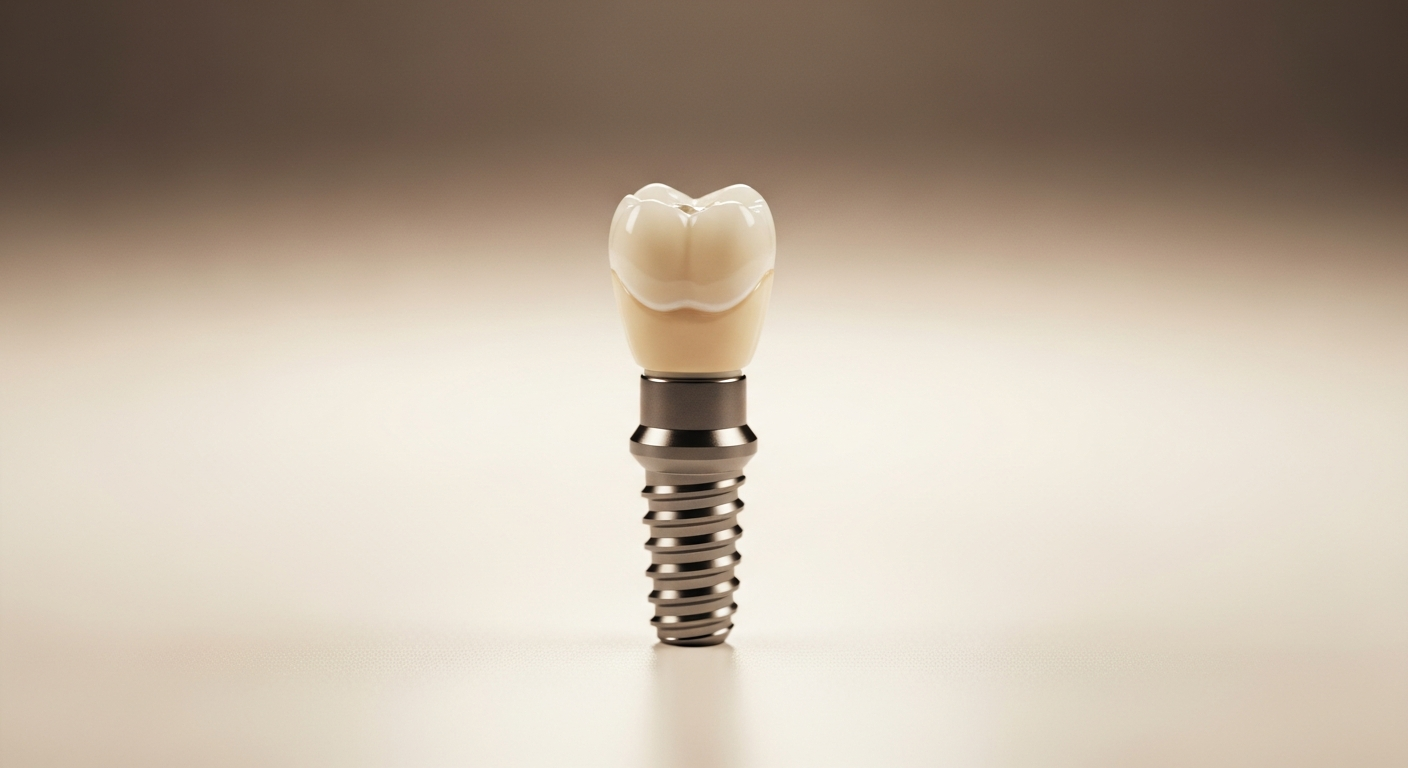
Dental implants work differently. An implant is a small post that's placed into the jawbone, where it acts like the root of a tooth. Once it heals, we attach a crown on top — and that crown is your new tooth.
Think of the implant post as a sturdy anchor set into the foundation, with the crown being the part you actually see and chew with. Because the post lives in the bone, implants tend to feel and function a lot like natural teeth. They don't come out for cleaning — you brush and floss around them like the rest of your mouth.
Implants do involve a surgical step and a healing period, so the process takes longer than fitting dentures. Not everyone is a candidate right away, either. Healthy gums and enough bone to support the post both matter, and that's something we check carefully before recommending it.
How Do You Choose Between Them?
This is where the personal stuff comes in, and it's the part I enjoy most. Before we ever talk about bone or crowns, I want to know about you — how you like to eat, what you do for work, whether a removable appliance would bother you day to day.
Here are a few of the things we weigh together:
Your Overall Health and Jawbone
Some health conditions affect how well an implant heals, and the amount of bone in your jaw plays a role too. If bone has shrunk where teeth have been missing a while, we'll talk about whether building it back up is an option, or whether dentures make more sense for you right now.
How Many Teeth You're Replacing
Replacing one tooth is a different conversation than replacing a whole arch. In some cases, we can combine ideas — for instance, using a few implants to anchor a denture so it sits more securely. There are more paths here than most people realize.
Your Daily Life and Comfort
Some folks don't mind removing an appliance at night. Others really want something that stays put and feels like part of them. Neither preference is wrong. Your comfort is a real factor in this decision, not an afterthought.
A Word on Cost and Insurance
I won't quote you numbers in a blog post, because the honest answer depends on your specific situation — how many teeth, what your mouth needs, and what your plan covers. Generally speaking, dentures cost less upfront, while implants often cost more at the start but are built to be durable over the long haul — and dentures carry their own ongoing costs in relines, adjustments, and eventual replacement, which is worth putting on the same page when you compare.
On insurance: we take all plans. We're not under contract with every single company, but that just affects how the billing works — it doesn't mean we can't see you. Here's how you get a real number: we examine first, then write out the plan with the costs on it and what your benefits are expected to pay, checked with your carrier rather than guessed. You read that before anything is scheduled, and if there's a balance, CareCredit and Cherry can break it into monthly payments.
What If You're Somewhere In Between?
A lot of people don't fall neatly into one camp. You might start with dentures and move toward implants later, or use implants to stabilize a denture you already have. Our restorative dentistry options give us room to mix and match based on what your mouth needs over time. There's rarely just one road forward, and that's a good thing.
FAQ
Are dental implants more painful than getting dentures? Implants involve a minor surgical step, so there's a healing period dentures don't require. That said, we focus on keeping you comfortable throughout, and many patients are surprised by how manageable the recovery feels. We'll talk through what to expect before anything happens.
Can I get implants if I've been missing teeth for years? Often, yes — but it depends on how much jawbone is still there. When teeth are gone a long time, the bone can shrink. We'd take a look with a full set of x-rays and let you know honestly whether implants are workable for you or whether another option fits better.
How long do dentures and implants last? Both are made to be long-lasting, though individual results vary. Dentures may need relining or adjusting as your jaw changes shape over time. Implants are built to be durable, and good daily care plus regular checkups go a long way toward keeping either option healthy.
Will dentures or implants look natural? Both can be made to look natural and harmonious with your face. We match shape and color to suit you, not a one-size-fits-all mold. The aim is teeth that feel like yours, whether they come out at night or stay in for good.
If you're weighing your options and want to understand what fits your situation, give us a call here in Munhall. We'll look at everything together and figure out the right path for you — no rush, and no question is too small.
More from Our Blog
Hydroxyapatite Toothpaste: Does It Work Without Fluoride?
In an 18-month trial, a fluoride-free hydroxyapatite toothpaste held its own against fluoride in healthy young adults. The evidence is still small, though, and a toothpaste maker helped fund the main trial.
Read more
Does Teeth Whitening Damage Your Enamel?
Used as directed, whitening doesn't wear enamel away. Peroxide softens the surface for a short time, saliva repairs most of it within about two weeks, and the sting some people feel comes from the nerve.
Read more
Are Silver Fillings Safe, and Should You Replace Yours?
For most adults, a silver filling in good condition is safe to leave alone, and drilling it out costs healthy tooth. Dr. D'Alesio explains what the FDA said in 2020, who it named, and the signs a filling really needs replacing.
Read more