
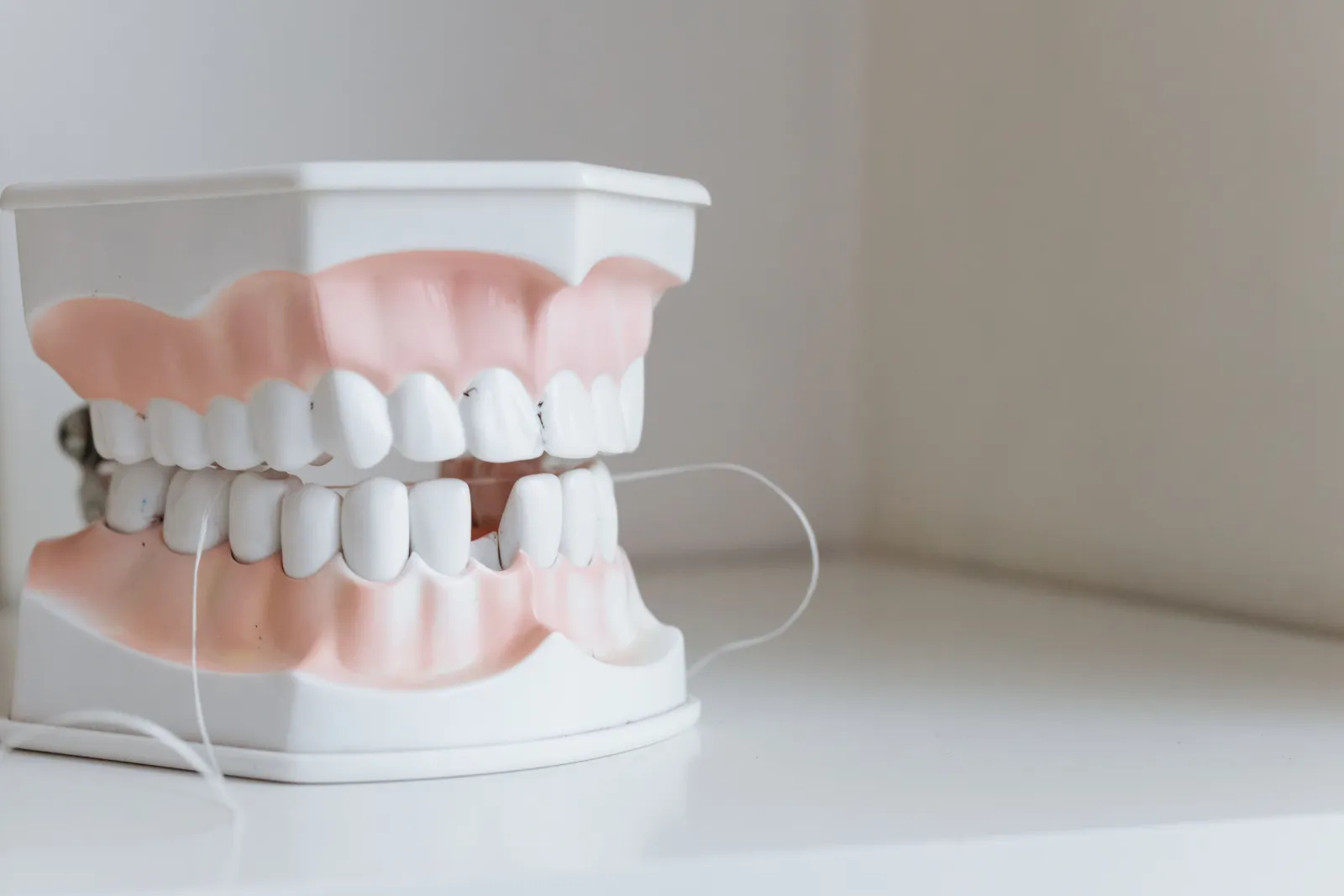
Maybe you skip flossing most nights, and maybe you remember the 2016 headlines saying it doesn't work. So is flossing necessary? Cleaning between your teeth every day is necessary, because a toothbrush can't reach that spot, but floss is only one way to do it. Here's what the research actually found, why the brush falls short, and how to pick a tool you'll keep using.
Did the research really show flossing doesn't work?
In August 2016, the Associated Press reported that the federal dietary guidelines had dropped their flossing advice without notice. The AP looked at 25 studies and called the evidence for flossing "weak" and "very unreliable." That same month, the U.S. Department of Health and Human Services reaffirmed flossing as an important oral hygiene practice, as the American Dental Association records.
Both statements were true at once. The studies were weak, but weak studies don't show that flossing does nothing, only that they weren't built to answer the question.
The largest review since then is a 2019 Cochrane review of 35 trials and 3,929 adults. It found that floss plus brushing may reduce gum inflammation more than brushing alone, and it rated that evidence low to very low certainty. The review itself names the limits:
- Most trials measured results over weeks or months, too short to track periodontitis or cavities between the teeth.
- Many people in the trials started with little gum inflammation, so there wasn't much for any tool to reduce.
- No trial measured cavities between the teeth, which is one of the two main things flossing is meant to prevent.
- People always knew whether they were flossing, so nobody could run the trials blind.
A short trial in people with mostly healthy gums will struggle to show a difference, whatever tool you test.
What happens when flossing is done well?
One older review answers this more directly. A 2006 review in the Journal of Dental Research looked at six trials with 808 children aged 4 to 13. In some trials, a professional flossed the children's teeth, mostly baby teeth, on school days for about 1.7 years. In those children, who had little fluoride exposure, the risk of cavities between the teeth dropped by 40%.
Two other approaches didn't lower the risk: professional flossing every three months, and young teenagers flossing on their own for two years.
The authors cautioned against stretching the result to everyday floss users, since self-flossing hadn't shown an effect. What the pattern does suggest is that frequency matters: flossing every school day worked, and flossing every three months did not.
Why can't a toothbrush clean between your teeth?
Each tooth touches its neighbor at a small spot called the contact point. Bristles sweep the front, the back and the chewing surface. They can't pass through that contact, and they barely reach the side of the tooth just below it. The Cochrane review notes the same limit: brushing clears the front and back surfaces, and other tools are often recommended for the gaps.
Below the contact point, a small triangle of gum fills the gap. Plaque, the sticky film of bacteria that builds up every day, settles in the corner where that gum meets the tooth. Neither chewing nor your brush disturbs it there, so it sits in place from one day to the next.
Left in that sheltered corner, the bacteria cause two problems.
-
Gum disease. The bacteria irritate the gum triangle, and your body sends extra blood to fight them. That's the swelling and bleeding of gingivitis, the early stage. If it continues, the inflammation can move deeper and break down the fibers and bone that hold the tooth, a stage called periodontitis.
-
Hidden cavities. The same bacteria feed on sugar and give off acid, which dissolves enamel on the side of the tooth. A cavity there forms just below the contact point, out of sight, and usually shows up on X-rays long before a mirror would show it.
What happens if you stop cleaning between your teeth?
Plaque that stays in place hardens into tartar as minerals from your saliva settle into it. Floss and brushes can't remove tartar, and only a professional cleaning takes it off.
Often the first sign is gums that bleed when you brush or floss. It's tempting to stop flossing at that point, but that works against you. The bleeding comes from the inflammation, and clearing the plaque away is what lets the gum settle. If a spot keeps bleeding even though you clean it every day, have it checked. A pocket that has deepened below the gumline won't respond to home care alone.
Our post on whether gum disease can be reversed explains where that line falls. For the signs people notice first and how we treat each stage, see our guide to gum disease treatment in Munhall.
Do interdental brushes or water flossers work instead of floss?
Some of them do. The American Dental Association recommends cleaning between your teeth once a day with floss or another interdental cleaner. The 2019 Cochrane review compared the main options.
Interdental brushes
These are tiny round brushes that slide into the gap between two teeth. The review found they may reduce gum inflammation more than floss does. They come in sizes, and the right one fits snugly without forcing. That makes them a good match for wider gaps and for spaces where the gum has shrunk back.
Floss and floss picks
Floss still fits the tightest contacts, where even the smallest brush won't pass. A floss pick holds the same strand on a handle, and some people find that easier to steer around the back teeth.
Water flossers
The results here were weaker. Water flossers may reduce gum inflammation at one month, but the review found no clear effect at three or six months. It also found no clear drop in plaque compared with brushing alone. If floss and small brushes don't work for you, a water flosser is an option, though the evidence behind it is weaker.
The review didn't name one best tool for everyone. Pick the one that fits your gaps and that you'll use every day.
How do you know if your cleaning between teeth is working?
You can't see inside the gap, so the answer comes from a visit. Every professional cleaning we do includes scaling, polishing, flossing and a final check. A checkup adds digital X-rays, which show the sides of the teeth where those hidden cavities start. We go over the images with you on a screen.
If your gums bleed easily, our gum health care starts with a periodontal screening of the gum around each tooth. When there's buildup below the gumline, the next step is a deep cleaning, called scaling and root planing, done under local anesthetic.
Not sure which tool or size suits your teeth? Ask at your next cleaning.
To set up a cleaning or a checkup, call us at (412) 462-3095 or use our contact page.
More from Our Blog
Is Mouthwash Bad for You? Alcohol, Bacteria and What to Use
For most people mouthwash isn't bad for you, but it isn't a cleaning either. Dr. D'Alesio explains the three kinds of rinse, what the alcohol and blood pressure studies found, and which one fits your mouth.
Read more
Oil Pulling: Does Swishing Coconut Oil Clean Your Teeth?
Oil pulling is unlikely to hurt as an extra, but it can't replace brushing, flossing or a professional cleaning. Dr. D'Alesio explains why plaque has to be scrubbed off and what the studies actually found.
Read more
Signs Your Dental Implant Is Infected, and What Happens Next
An infected implant can bleed and swell at the gum without hurting at all. Here are the signs, why implants feel so little, and what happens once we find it.
Read more