
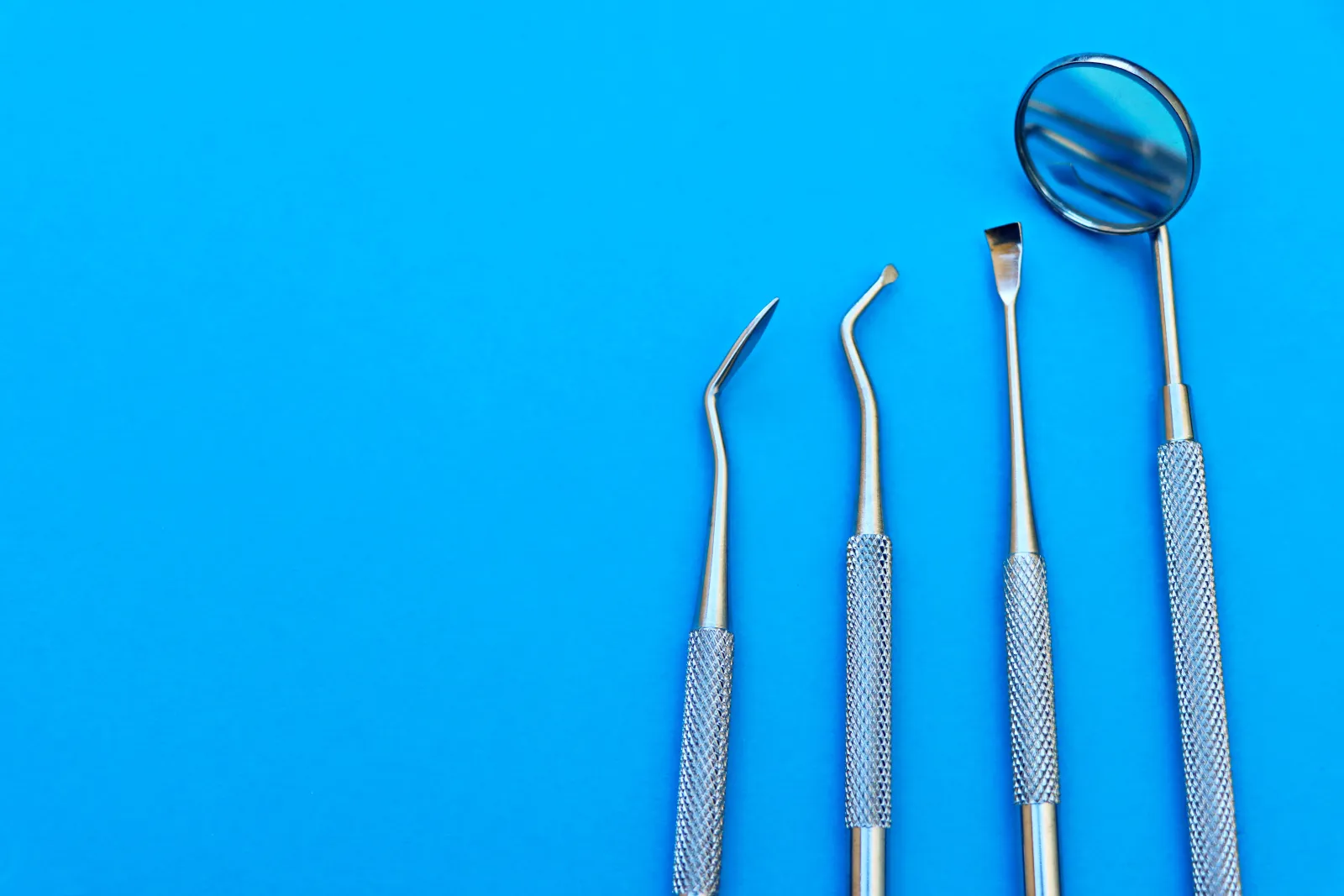
Maybe you noticed a few dark gray fillings on your back teeth in the mirror, or a friend mentioned the mercury in them. So are amalgam fillings safe, and should yours come out? For most adults, a silver filling in good condition is safe to leave where it is. Taking out a sound one costs you healthy tooth and gains you very little. Here's what's in the filling, what the FDA actually said and who it was talking about, and the signs that one really does need replacing.
What is actually in a silver filling?
"Silver filling" is the everyday name, and dentists call the material amalgam. According to the FDA, it's a mix of liquid mercury and a powdered alloy of silver, tin and copper. About half of it by weight is mercury.
That number sounds alarming on its own, so it helps to know what happens to the mercury. When the two parts are mixed, the mercury reacts with the metal powder and sets into a hard, solid alloy. By the time you leave the office, it isn't a loose liquid sitting in your tooth anymore.
A set filling does still give off small amounts of mercury vapor over time. The FDA's 2020 statement says the amount can depend on how old the filling is and on habits like grinding your teeth. It also says the release can be highest at two moments: when a filling goes in, and when someone drills one out. Keep that second moment in mind, because it matters when you're deciding whether to replace one.
A silver filling also holds onto the tooth in a different way from a tooth-colored filling, because it doesn't bond to the tooth. The dentist shapes the cavity with walls and small undercuts that lock the metal in, which usually means removing some sound tooth. A composite filling bonds to the tooth instead, so a new one can often stay smaller.
Are amalgam fillings safe? What the FDA said in 2020
In September 2020 the FDA issued recommendations for people at higher risk. It said most of the evidence suggests the vapor from amalgam fillings doesn't cause harmful health effects for most people. It also said the picture is less certain for some groups, and it advised them to avoid getting amalgam whenever possible and appropriate. The FDA named these groups:
- Pregnancy and nursing: pregnant women and their developing babies, women planning to become pregnant, and nursing women and their infants.
- Young children: children, especially those under six.
- Certain health conditions: people with an existing neurological disease or with impaired kidney function.
- Allergy: people with a known allergy or sensitivity to mercury or to the other metals in amalgam.
Notice the word "getting," because that advice is about new fillings. The same statement says the FDA is not recommending that anyone remove or replace amalgam fillings in good condition unless it's medically necessary. That includes the higher-risk groups. The American Dental Association still describes amalgam as a safe and durable filling material.
Why not just replace them all to be safe?
It sounds like the careful choice, but there are three reasons it usually isn't.
The first is that you lose tooth. Nobody can lift a filling out whole, so the dentist drills it out. The drill takes a thin layer of the tooth around it along with the metal. The new filling then sits in a bigger hole than the old one did, and each round of that leaves less of your own tooth. A tooth that runs short of structure ends up needing a crown, which fits over the tooth like a hard hat so it doesn't split.
The second is that removal is one of the moments when vapor release can be highest. So if mercury is the worry, drilling out a sealed filling can cause a short rise in the very exposure you wanted to avoid. The FDA gives both of these, the lost tooth and the extra vapor, as its reasons for leaving intact fillings alone.
The third is that a new filling isn't automatically a longer-lasting one. The ADA cites evidence that amalgam fillings tend to survive longer than composite ones. Composite has real strengths, since it matches your tooth and bonds to it, which can keep a brand-new cavity smaller. On an old filling that's still sealed, though, those strengths don't give back the tooth you lose getting it out.
Some people do replace sound silver fillings because they don't like how they look, especially ones that show when they smile. That's a fair reason and your decision to make. It's a cosmetic choice rather than a health one, so it's worth making with the tradeoff in view.
When does a silver filling actually need replacing?
Fillings wear. Every time you chew, the tooth flexes a little. Over the years, the edge where the filling meets the tooth can start to open up. These are the real reasons to replace one.
A crack in the tooth
A large silver filling can leave thin walls of tooth around it, and biting force can crack those walls over time. You might feel a sharp twinge when you bite down on something, and then again when you let go.
A leaking edge
When the seal at the edge of a filling breaks down, a small gap forms between the metal and the tooth. Bacteria and bits of food settle into that gap, in a spot your toothbrush can't reach.
Decay underneath
A leaking edge often leads here. New decay can grow under an old filling without any pain at all, because it hasn't reached the nerve yet.
A broken or missing piece
If part of the filling chips away, your tongue will often find a rough or sharp spot that wasn't there before.
A gray tint in the tooth around an old filling is common, because metal can show through thin enamel. The tint alone doesn't tell us whether there's decay under it, so point it out and let the exam and X-rays answer that.
When a filling does fail, the right replacement depends on how much sound tooth is left. A smaller repair can usually be a tooth-colored composite filling, while a tooth with thin or cracked walls is better protected by a crown.
How do we check your fillings, and what should you ask?
Many filling problems don't hurt until they're well along, so they tend to turn up at checkups rather than by feel. We look at each filling during the exam and take digital X-rays, which can show decay around a filling that's hidden from view. Then we go over what we found with the images up on the chairside screen.
If you're wondering about a particular filling, these questions will get you a real answer:
- Is this filling still sealed at the edges, or is there a gap?
- Does the X-ray show any decay under it?
- Are there any cracks in the tooth around it?
- If it needs replacing, is a new filling enough, or does the tooth need a crown?
- If it's sound, is there any reason to change it besides how it looks?
If you're in one of the groups the FDA named and you need a new filling, tell us before we plan it. You can read more about the tooth-colored option in our post on composite fillings.
Want to know where your silver fillings stand? Call us at (412) 462-3095 or reach us through the contact page, and we'll check them at your next visit.
More from Our Blog

Does Teeth Whitening Damage Your Enamel?
Used as directed, whitening doesn't wear enamel away. Peroxide softens the surface for a short time, saliva repairs most of it within about two weeks, and the sting some people feel comes from the nerve.
Read more
How Much Does a Root Canal Cost? What Changes the Price
Root canal cost follows the tooth: a back tooth has more canals to clean than a front one, and the crown that protects it afterward is a separate line. Dr. D'Alesio explains what a quote covers and what to ask for.
Read more
Can Gum Disease Be Reversed? Where the Line Is
Gingivitis can be reversed because the fibers and bone holding the tooth are still intact. Periodontitis can't be undone, but it can be brought under control and kept stable.
Read more