
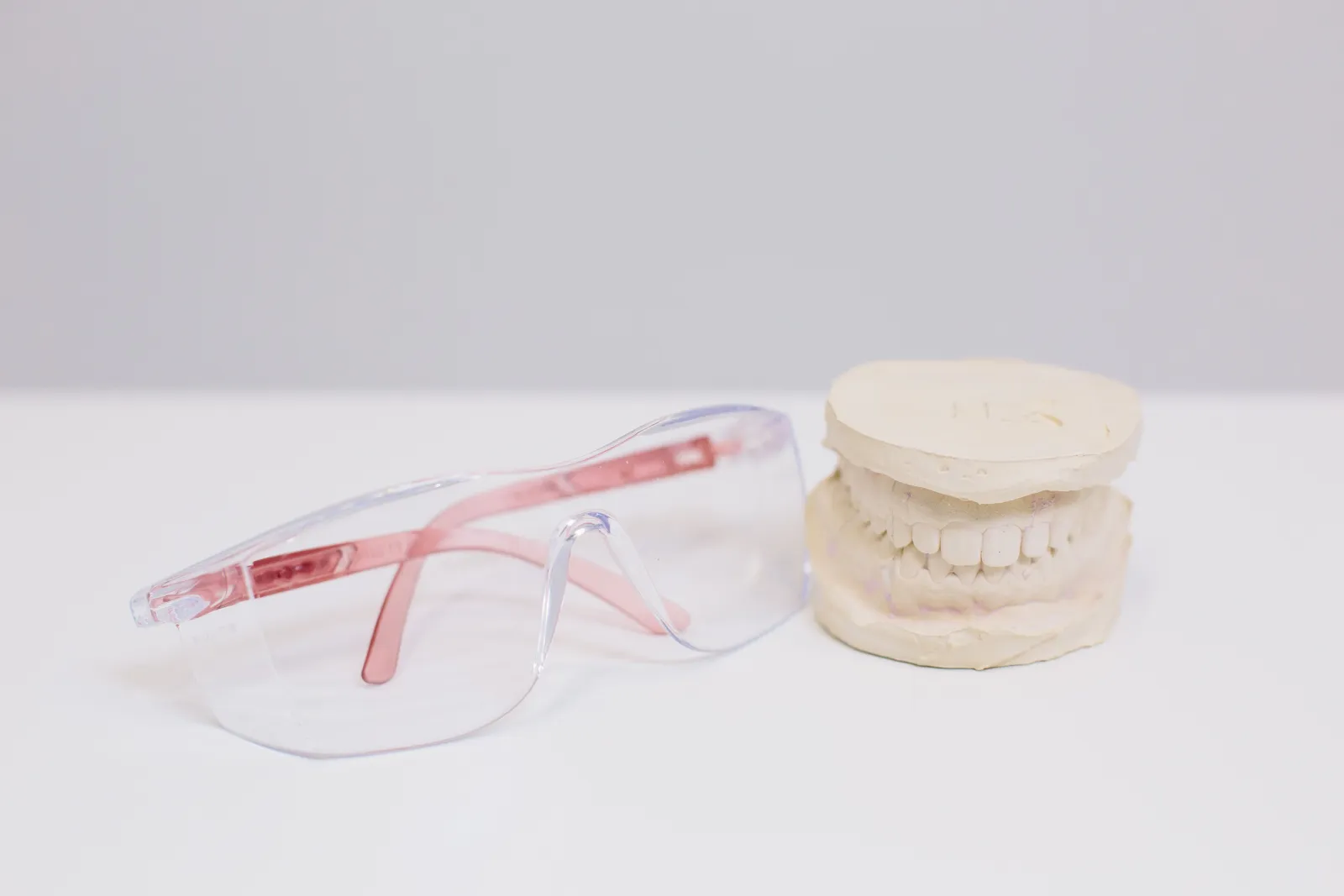
When a tooth is gone, you may notice the gap when you chew on that side, and soon you start asking what should go there. Dental implants vs bridge is the choice most people end up weighing, and most comparisons stop at a list of pros and cons. The more useful question is what each option does to the teeth and bone around the gap, because that's where the two part ways.
How does a bridge replace a missing tooth?
A bridge hangs the replacement tooth from the teeth on either side of the gap, and those two neighbors are called abutments. To carry a crown, each one typically has to be shaped down on every side so the crown can slip over it. The new tooth in the middle is joined to both crowns, and the three units are made as one piece.
Enamel doesn't grow back, so that shaping is a one-way step. It leaves the softer layer underneath, called dentin, closer to the surface and to the nerve inside the tooth. That's why the neighbors matter so much, since they keep doing their own work and now carry part of the missing tooth's load too.
A trusted outside lab makes the bridge, so it takes more than one visit. At the first visit we shape the neighbors and take a digital scan. You leave with a temporary restoration while the lab makes the final one, and at the second visit we check the fit and deliver it. Our page on crowns and bridges walks through each step.
What does an implant do differently?
An implant replaces the root instead of borrowing from the neighbors. It has three parts: a post that sits in the jawbone, a connector called an abutment, and a crown on top. Dr. D'Alesio places and restores single-tooth implants here, and we numb the area with a local anesthetic for the surgery.
After placement, the bone needs time to grow against the post and hold it. That healing takes several months, and the crown goes on once it's done, as our page on dental implants explains.
An implant doesn't involve the neighboring teeth, so nothing is shaved down and nothing is attached to them.
What happens to the bone under a missing tooth?
This is the part most comparisons skip. A tooth root passes chewing force into the jawbone every time you bite, and bone is living tissue that responds to the load it carries. When the tooth is gone, that load stops and the bone around the empty socket begins to remodel.
A 12-month study of 46 patients who had a premolar or molar removed tracked the site with casts and X-rays. It found that major changes at the extraction site occurred within the year after the tooth came out.
A bridge doesn't change that, because the replacement tooth rests above the gum. Chewing force travels down through the two neighbors, and little of it reaches the bone under the gap. An implant is different, because the post sits in the bone and carries the force of biting into it, the way a root did. That's why an implant may help keep the bone in that spot working.
Over the years, the gum under a bridge tooth may pull back as the bone beneath it shrinks. That may leave a small space where food collects, and one more spot to keep clean.
Dental implants vs bridge: which lasts longer?
Both can last for many years, and the numbers are close. A 2007 systematic review in Clinical Oral Implants Research pooled studies in which patients were followed for an average of at least five years. It estimated that 93.8% of conventional bridges and 94.5% of single-tooth implant crowns were still in place at five years. At ten years, the figures were 89.2% and 89.4%.
That review pooled separate studies instead of running a head-to-head trial. It counted whether a restoration was still in place, not whether it was trouble-free. The two options run into different kinds of trouble:
-
Bridges: the most frequent problems were biological. The abutment teeth developed cavities, or the nerve inside one stopped being healthy.
-
Implants: technical problems were significantly more common with implant-supported restorations. Examples were chipped porcelain on the crown, a loose screw, or a crown that came loose.
Results vary from person to person, and care at home and regular checkups matter for both. Our post on how long dental implants last covers what shortens an implant's life. Our post on the signs of an infected implant covers what to watch for.
When does a bridge make more sense?
A bridge isn't the lesser option, and in some mouths it's the better fit. These are the questions that tip the choice:
-
Are the neighbors already crowned or heavily filled? If both teeth already need crowns, the shaping costs them less, because the crowns would be needed anyway. If both are healthy, shaping them down is a bigger trade.
-
How are the bone and gums? An implant needs enough healthy bone and gum around the post. If the exam shows they aren't ready, that changes the answer.
-
How many teeth are missing? We focus on single-tooth implants. If you're missing several teeth, we'll tell you honestly what fits and refer you when a case calls for more complex surgery.
-
How do you feel about surgery and a long wait? A bridge needs no surgery and takes fewer visits. An implant takes surgery and months of healing, then a crown. That's a real cost in time, and for some people it settles the question.
If you're also weighing removable teeth, our post on dentures vs dental implants covers that comparison.
What do the exam and X-ray decide?
The exam turns these questions into answers for your mouth. Digital X-rays show how much bone sits beside the gap and how healthy the roots of the neighboring teeth are. We also look at the fillings and crowns already on those teeth and check the health of your gums.
Cost follows the same details, so we don't put a number in a blog post. What drives it differs between the two options. An implant quote covers the surgery, the post, the connector and the crown. A bridge quote covers shaping the two neighbors, the three joined crowns and the lab work.
Whichever you're weighing, ask for the quote to list each of those parts, and ask what your plan is expected to cover. You can also call us to have your benefits verified, and our financing page covers CareCredit, Cherry and our membership plans.
If you've lost a tooth and want to know which option fits, call us at (412) 462-3095 or use the contact page.
More from Our Blog
Is Flossing Actually Necessary? What the Evidence Shows
Yes, you need to clean between your teeth every day, because a toothbrush can't reach the spot where gum disease and hidden cavities start. Floss is one way to do it, and interdental brushes are another.
Read more
Is Mouthwash Bad for You? Alcohol, Bacteria and What to Use
For most people mouthwash isn't bad for you, but it isn't a cleaning either. Dr. D'Alesio explains the three kinds of rinse, what the alcohol and blood pressure studies found, and which one fits your mouth.
Read more
Oil Pulling: Does Swishing Coconut Oil Clean Your Teeth?
Oil pulling is unlikely to hurt as an extra, but it can't replace brushing, flossing or a professional cleaning. Dr. D'Alesio explains why plaque has to be scrubbed off and what the studies actually found.
Read more