
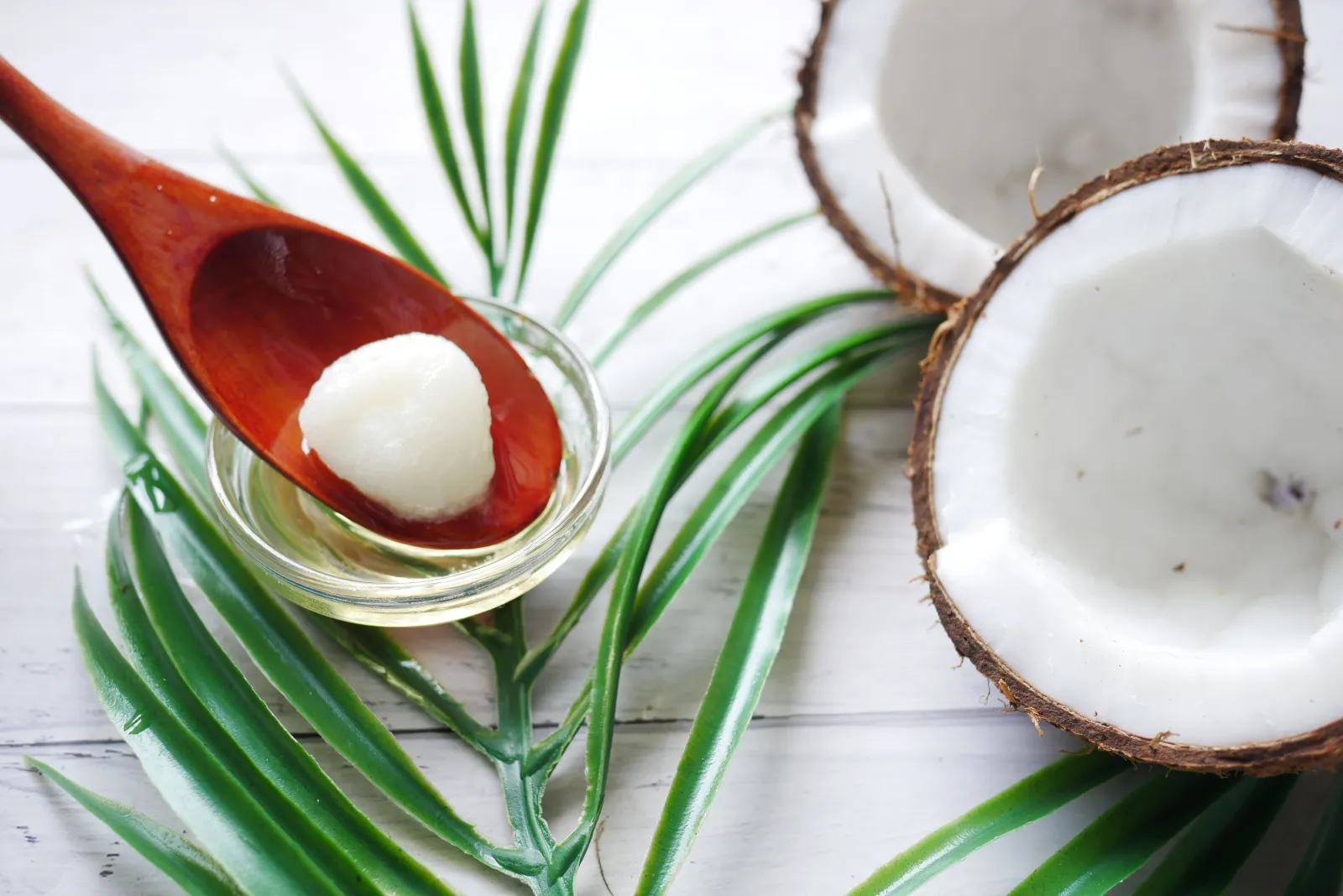
You've probably seen someone on social media swish a spoonful of coconut oil for fifteen or twenty minutes, then promise fresher breath and whiter teeth. Oil pulling for teeth is an old practice from India that has come back as a wellness trend. So does it work? As an extra step it seems to do a little, and it's unlikely to hurt. As a replacement for brushing, flossing or a professional cleaning it can't work, and the reason is physical.
Why can't swishing oil do what a toothbrush does?
Plaque is a living film of bacteria, not loose food resting on your teeth. The bacteria attach to the tooth surface and then build a sticky, glue-like layer around themselves, which dentists call a biofilm. That layer anchors the colony to the tooth and shields it from whatever washes past.
Any liquid moving over a biofilm mostly slides across the top of it, whether that liquid is water, mouthwash or oil. To remove plaque, something has to touch it and break it apart. Toothbrush bristles do that on the surfaces they reach, and floss does it between teeth, where bristles can't fit.
The slippery film inside a pet's water bowl works the same way. Rinsing the bowl leaves it behind, while wiping it with a sponge takes it off.
What happens to plaque that stays on your teeth?
Plaque that stays put doesn't stay soft for long. Minerals from your saliva settle into it and harden it into tartar, which dentists also call calculus. Tartar bonds to the tooth, so no brush, floss or rinse will lift it, and only a dental instrument can take it off. We call that scraping step scaling, and it's the first part of every professional cleaning we do, followed by polishing, flossing and a final check.
Tartar along the gumline matters most, because its rough surface gives fresh plaque an easy place to grip. The gums next to it become inflamed, which is gingivitis: gums that look puffy and bleed when you brush.
If nothing changes, the inflammation works its way below the gumline. There it starts to break down the gum attachment and the bone that hold the tooth in place, a later stage dentists call periodontitis. The gum pulls away and leaves a pocket, and tartar collects at the bottom of it where no swished liquid can scrape. That's why oil pulling can't treat gum disease once it has started. Our post on whether gum disease can be reversed explains where the line between those two stages falls.
What did the oil pulling studies actually find?
The fair summary is some measurable change in short studies, with weak evidence behind it.
A 2024 systematic review in the International Journal of Dental Hygiene pooled 25 randomized trials, lasting 7 to 45 days, with 1,184 participants. Half the trials used sesame oil rather than coconut oil, and more than half enrolled people with no reported oral health problems. Against mouthwashes other than chlorhexidine, oil pulling improved scores for gum inflammation. Chlorhexidine, a strong antibacterial rinse that dentists prescribe, reduced plaque more than oil pulling did. The authors rated the overall quality of the evidence as very low.
Coconut oil, the kind most people try, has even less behind it. A 2020 systematic review in Heliyon found only four randomized trials of coconut oil pulling, with 182 people in all. None of them lasted longer than two weeks. The authors read that limited evidence as a possible benefit. They called for more rigorous trials to show whether it really improves oral health.
A recent trial from Innsbruck, Austria ran longer than any trial in those reviews. Forty people swished either sesame oil or distilled water for 15 minutes every morning for eight weeks. Plaque scores fell by a median of about 19% in the oil group and about 10.5% in the water group. Gum scores and the bacteria in plaque samples showed no significant change, and the authors said they couldn't rule out bias in their own results.
Notice what these studies didn't measure. The 2024 review looked at plaque scores, gum scores and bacteria counts, but it didn't count cavities, and its longest trial ran about six weeks. The ADA does not recommend oil pulling as a dental hygiene practice. It says no reliable studies show that oil pulling reduces cavities, whitens teeth or improves oral health.
Is oil pulling safe to add to your routine?
For most people, yes. An ADA spokesperson told ADA News that swishing a food-safe oil is unlikely to do harm. The ADA's concern is people using it in place of care that works.
If you want to try it, a few practical points will help:
- Brush and floss as usual, since the ADA recommends brushing twice a day with fluoride toothpaste and cleaning between your teeth once a day. Oil pulling goes on top of that.
- Spit the oil into the trash, not the sink, as the ADA advises, because oil can clog your drain as it cools.
- Don't swallow it, and don't let it slip down the wrong way. Breathing in oil can inflame the lungs, and a 2015 medical report described two rare cases after months of sesame oil pulling.
When should you have your gums checked instead?
Some signs mean plaque has already gone further than any rinse can reach. Watch for gums that bleed when you brush or floss, or bad breath that keeps coming back. Gums pulling back from your teeth and a tooth that feels loose count too. Those are reasons to have your gums looked at, not reasons to swish longer.
At every gum health visit, we measure the depth of the pockets between your gums and teeth. If tartar has built up below the gumline, the usual treatment is a deep cleaning, called scaling and root planing. We numb the area with local anesthetic and clean the root surfaces, usually over one or two appointments. After that, maintenance visits every three to four months let us keep an eye on those pockets. Our post on gum disease treatment covers what to expect at each visit.
If you've been oil pulling and want to know whether your gums are healthy, bring it up at your next cleaning. Call us at (412) 462-3095 or reach us through our contact page.
More from Our Blog
Signs Your Dental Implant Is Infected, and What Happens Next
An infected implant can bleed and swell at the gum without hurting at all. Here are the signs, why implants feel so little, and what happens once we find it.
Read more
Is Sparkling Water Bad for Your Teeth?
Plain sparkling water does very little to enamel. Added citric acid, added sugar and all-day sipping do far more than the bubbles. Dr. D'Alesio explains what the studies measured.
Read more
Hydroxyapatite Toothpaste: Does It Work Without Fluoride?
In an 18-month trial, a fluoride-free hydroxyapatite toothpaste held its own against fluoride in healthy young adults. The evidence is still small, though, and a toothpaste maker helped fund the main trial.
Read more