
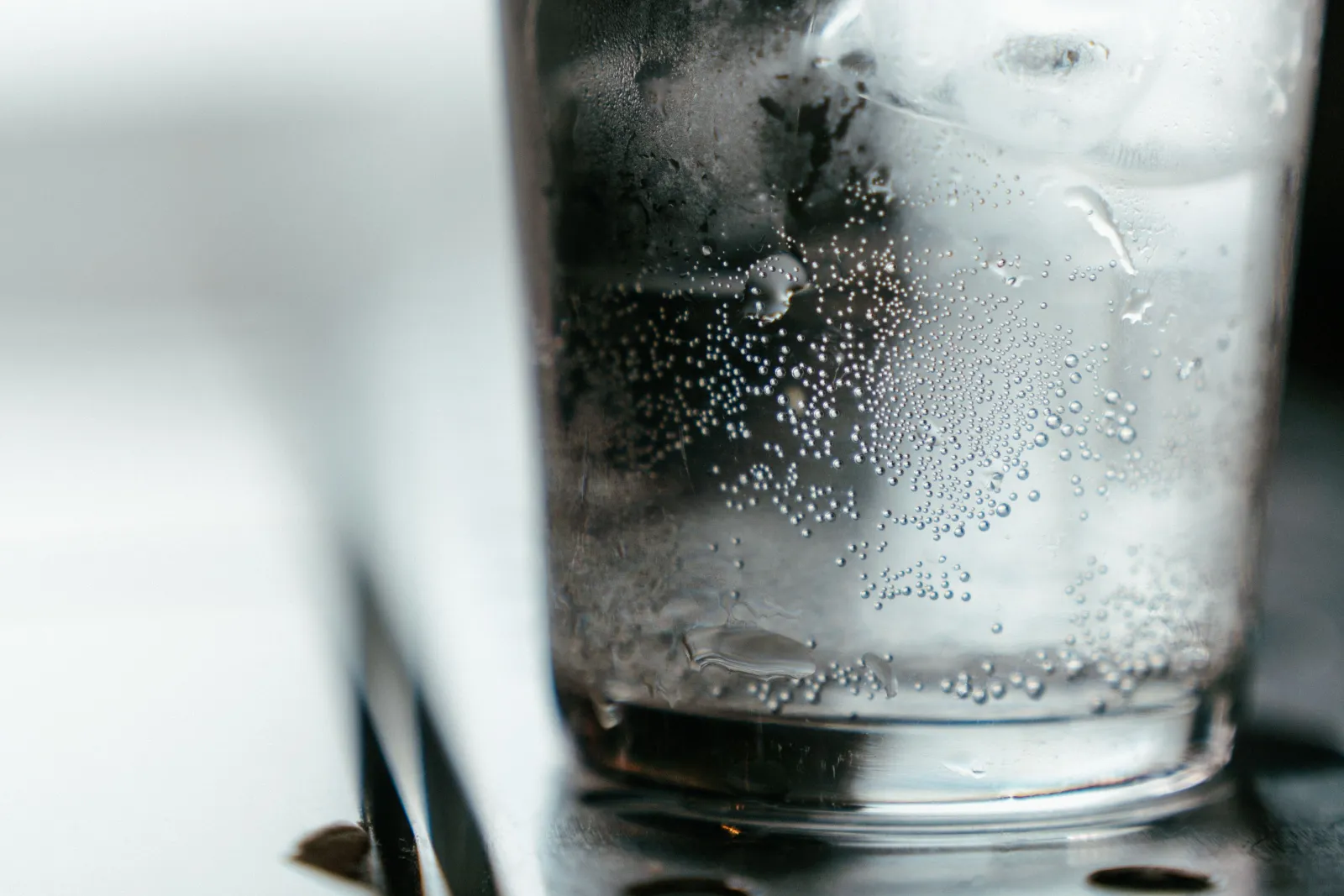
If you swapped soda for a can of seltzer, someone has probably told you that the bubbles are eating away at your teeth. So is sparkling water bad for your teeth? Plain sparkling water does very little to enamel. In lab tests, sparkling mineral water dissolved tooth mineral about a hundred times less than soft drinks did. Watch for three other things instead: added acid, added sugar and the habit of sipping all day long.
Is sparkling water bad for your teeth, or is it the bubbles?
The bubbles are carbon dioxide, and when that gas dissolves in water, a small share of it turns into carbonic acid. That acid gives seltzer its slight bite, so the worry has a real starting point. Carbonated water is more acidic than the water from your tap.
Carbonic acid is a weak acid, though, and it doesn't stay put in the drink. The gas keeps escaping as bubbles, which is why an open can goes flat, and the acid leaves along with it.
A 2001 study in the Journal of Oral Rehabilitation tested this on extracted human teeth. Sparkling mineral waters dissolved slightly more tooth mineral than still waters, but the amounts stayed very low. They came out about a hundred times lower than the soft drinks tested beside them. When the researchers let a sparkling water go flat first, it dissolved even less. They concluded that carbonation on its own may not be an important cause of erosion.
Those were mineral waters, though. The same study found that calcium, one of the minerals they carry, slowed dissolution when the researchers added it to pure water. Seltzer and club soda weren't part of the test. So read that hundred-fold gap as a best case for plain seltzer, not a promise.
How acidic is plain sparkling water, really?
We measure acidity on the pH scale, where 7 is neutral, lower numbers are more acidic, and each step down means ten times more acid. A 2016 study in the Journal of the American Dental Association measured the pH of a wide range of drinks sold in the U.S. It sorted them by how likely they are to wear enamel. Drinks below pH 3 counted as extremely erosive, and drinks from pH 3 to just under 4 as erosive. Anything at pH 4 or above counted as minimally erosive.
Two sparkling mineral waters and a club soda in that study measured between 4.96 and 5.25, which puts all three in the lowest-risk group. The same study notes that surface enamel starts losing mineral below about pH 5.5, so plain seltzer does sit a little under that line.
That number alone doesn't settle the question, and the same study shows why. One of the still bottled waters it tested measured 5.03, about the same as the sparkling ones, and nobody worries about still water. What matters to a tooth is how much mineral a drink actually dissolves, and the extracted-tooth tests above measured exactly that. Sparkling mineral water dissolved very little.
Which sparkling waters are the problem?
Flavor is where the picture changes. Some flavored waters get their tang from citric acid, the same acid found in lemons, and it behaves very differently from the bubbles. Citric acid is stronger than carbonic acid, it doesn't escape as gas, and it stays in the drink until you swallow it. It also pulls calcium out of the enamel surface while it sits there.
A 2007 study in the International Journal of Paediatric Dentistry tested flavored sparkling waters bought in UK stores. Every one of them measured between pH 2.74 and 3.34. In the lab they dissolved as much tooth mineral as pure orange juice did, and some dissolved more. The authors said these drinks should be treated as acidic drinks rather than as water with a little flavoring.
Brands vary a lot, so the ingredient list on the can is your best guide. Look for an added acid, such as citric, malic or phosphoric acid, because those make a drink acidic in a way the bubbles don't. Then look for sugar, juice or syrup. Bacteria in plaque turn sugar into acid right at the tooth surface. That's how cavities start, and it's a separate problem from acid wear.
If the label lists no added acid and no sweetener, you most likely have plain sparkling water with a scent added. What you read above about plain seltzer should apply to it.
Does how you drink it matter more than how much?
Often it does, because of what happens between sips. Every time acid touches your teeth, the enamel surface loses a little mineral. Then saliva goes to work, washing the acid away and bringing calcium and phosphate back to rebuild that surface. The repair only happens during the gaps.
Picture two people who each drink the same can of lemon seltzer. One finishes it with lunch, and the other sips it slowly across the whole afternoon. The first person's teeth get one short acid visit followed by a long stretch of repair. For the second person, each sip lands before saliva has finished the last repair. The enamel surface can stay acidic for most of the afternoon.
A few habits make a real difference. Drink flavored or sweetened versions with a meal or in one sitting, rather than nursing a can all day. Afterward, take a few sips of plain tap water to rinse acid and sugar off your teeth. Hold off on the toothbrush, too. The ADA suggests you wait an hour before brushing after something acidic, so saliva can wash the acid away first.
For your everyday drink, the ADA's MouthHealthy site calls regular fluoridated water the best drink for your teeth. It helps fight cavities and rinses away leftover food. Fluoride also helps enamel hold up against acid, and our post on whether fluoride is bad for you explains how that works.
What happens if acid has already worn some enamel?
Saliva can repair a surface that acid has softened, but enamel that has fully worn away doesn't grow back. Early wear often shows up as smooth, glassy surfaces, edges that turn slightly see-through, or teeth that twinge when something cold touches them. Sugar in a sweetened drink brings its own risk, because it feeds the bacteria that cause cavities.
Both problems show up at a regular checkup with digital X-rays. We do a full mouth exam and then go over the images with you on a chairside screen, so you can see what we see. If a cavity has started, a tooth-colored composite filling repairs it and blends in with the tooth around it. If you're also thinking about whitening, our post on whether whitening damages enamel explains what peroxide does to the enamel surface.
Want to know how your enamel is holding up? Call us at (412) 462-3095 or use our contact page, and we'll take a look.
More from Our Blog
Hydroxyapatite Toothpaste: Does It Work Without Fluoride?
In an 18-month trial, a fluoride-free hydroxyapatite toothpaste held its own against fluoride in healthy young adults. The evidence is still small, though, and a toothpaste maker helped fund the main trial.
Read more
Does Teeth Whitening Damage Your Enamel?
Used as directed, whitening doesn't wear enamel away. Peroxide softens the surface for a short time, saliva repairs most of it within about two weeks, and the sting some people feel comes from the nerve.
Read more
Are Silver Fillings Safe, and Should You Replace Yours?
For most adults, a silver filling in good condition is safe to leave alone, and drilling it out costs healthy tooth. Dr. D'Alesio explains what the FDA said in 2020, who it named, and the signs a filling really needs replacing.
Read more